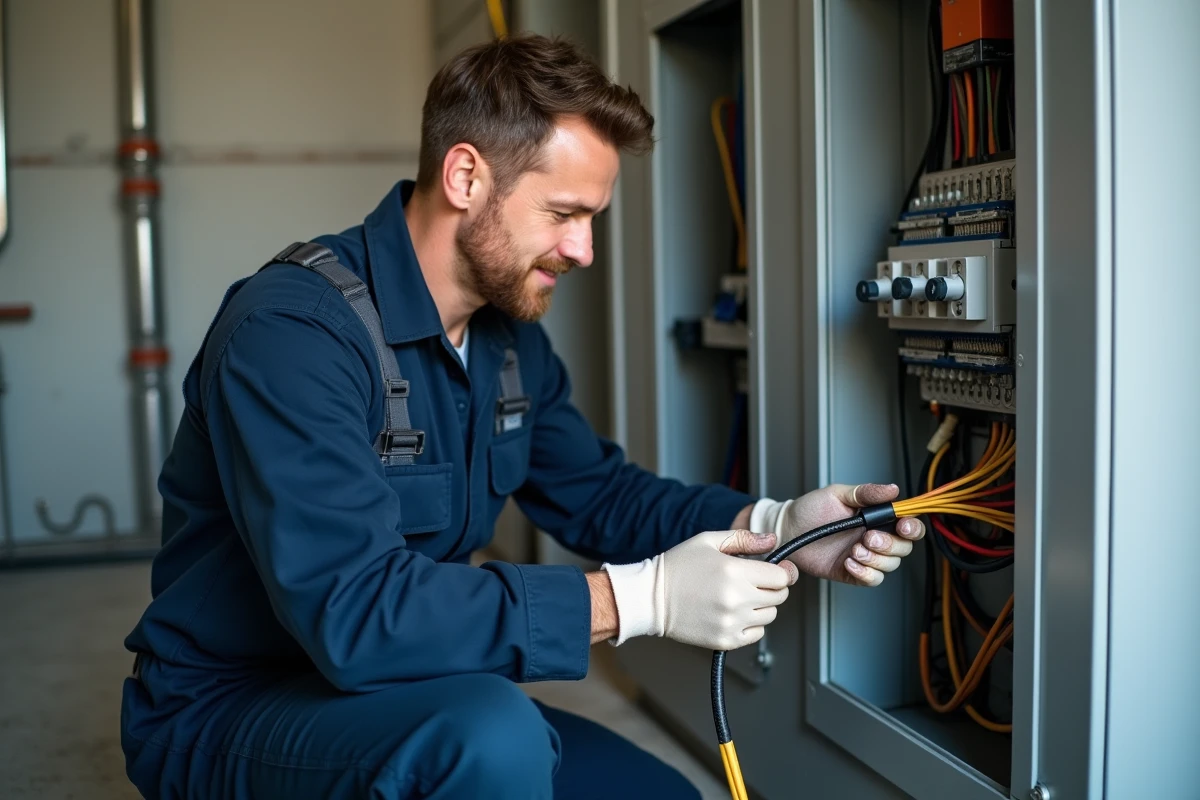
An inadequate cable section leads to overheating, even in the absence of apparent overload. Standards require precise marking, but some manufacturers tolerate diameter variations that complicate the choice during renovation. The use of R2V cable remains permitted when visible, in conduits, or buried without sheathing, an exception that persists despite the evolution of safety requirements.
Regulations impose minimum distances between electrical cables and water pipes, but exemptions exist for embedded installations. The most common errors concern compatibility with protection devices and the interpretation of color codes.
Understanding the different electrical cables and their uses in the home
Choosing an electrical cable is not trivial: it is the reliability of each outlet, the robustness of the entire home network that depends on it. In the abundant world of types of cables, R2V stands out as the reference for distributing power to electrical panels, outlets, and lighting. Alongside, other, more flexible cables find their utility for connecting mobile equipment or crossing narrow spaces, but they do not serve the same functions.
At the center, the copper conductor ensures reliable current flow. The thick, durable PVC insulation protects the cable from shocks, moisture, and temperature variations. To navigate this, one must distinguish between the rigid electrical wire, perfect for fixed installations and easy to connect in devices, and the multi-strand wire reserved for areas where bending is frequent, but less common for powering main circuits.
Here are the main advantages of the R2V cable for domestic circuits:
- The R2V cable is suitable for almost all circuits in the house, whether it is a socket circuit, a lighting circuit, or the power supply for an electrical panel.
- Its thick sheath allows it to be installed directly in walls, in the floor, or visibly, without adding extra sheathing.
To broaden the discussion on electrical cables and understand the criteria to consider when renovating or creating a network, the Eklectik info website offers a comprehensive file. The analysis covers each use, the nature of the copper cable, and the section suited to the intended power, going beyond simple comparison to question the relevance of choices in terms of equipment.
How to choose the R2V cable suitable for your installation: sections, applications, and pitfalls to avoid
Cable section: a matter of power and distance
To ensure the robustness of an electrical installation, it is essential to select the R2V cable section based on the power to be supplied and the length of the run. Expressed in mm², this section determines the capacity of the power cable to deliver energy without causing overheating or excessive voltage drop. For a standard socket circuit, 2.5 mm² is the reference; a cooking plate requires 6 mm². When the distance exceeds 30 meters, it is necessary to calculate the voltage drop precisely according to the power and length of the circuit. Omitting this detail exposes one to malfunctions, sometimes leading to serious incidents.
The common sections to remember for each domestic use:
- 2.5 mm² for up to 8 outlets per circuit
- 1.5 mm² for light points
- 6 mm² for energy-consuming devices like the oven or cooking plate
Applications and installation methods: versatility to master
The R2V cable finds its place in many contexts: cable for electrical panel, meter supply, dedicated circuits. Its robust sheath allows for visible installation, burial under TPC sheathing, or embedding in walls. Its resistance to moisture and temperature variations makes it suitable for basements or garages, provided the appropriate installation method is followed.
Pitfalls to avoid
Be cautious of classic errors regarding the power supply cable section: a cable that is too thin, a poorly estimated distance, an underestimated power, and the entire network may falter. Relying on the current standards and consulting section tables remains the guarantee of a durable installation.

Standards, safety, and best practices for a reliable installation with U1000 R2V cable
Compliance with regulations and conformity checks
In France, the NF C 15-100 standard structures every aspect of an electrical installation. It sets the rules for laying U1000 R2V cables: sections, paths, connections. The slightest deviation weakens safety. Before any intervention, always check for the absence of voltage, protect each circuit with an appropriate differential circuit breaker, and connect the earth conductor to a compliant earth rod. This precaution effectively protects against indirect contacts and reduces the risk of electric shock.
Installation precautions and equipment selection
Installing a U1000 R2V cable requires rigor and method. To cross a wall or go visible, it is better to slide the electrical cable into an ICTA sheath or a conduit: this additional covering limits abrasion and heating. An appropriate mechanical protection, especially in exposed areas, prolongs the lifespan of copper conductors.
Here are some rules to integrate into every project:
- Ensure the continuity of phase, neutral, and earth to the electrical panel.
- Adjust the rating of the subscriber circuit breaker according to the section and use of the circuit.
- Avoid concentrating several high-power lines in the same sheath to limit the Joule effect.
The reliability of the network depends on vigilance and traceability at every stage. Visual inspection, insulation measurement, rigorous checking of terminal tightening: these controls, from the meter to the electrical panel, make all the difference. A well-thought-out network promises an installation that lasts, without missteps or unpleasant surprises.