
Remote monitoring is undoubtedly one of the most effective solutions for combating burglaries, assaults, and fire risks in homes. But what is it actually? How is it useful? What concrete advantages can be achieved? We tell you everything about the subject in this article! The
Content
- 1 What is remote monitoring?
- 2 Remote monitoring and video surveillance: what’s the difference?
- 3 How does remote monitoring work?
- 4 Remote monitoring: usefulness and advantages
- 5 Remote monitoring: the main devices and their advantages?
- 5.1 Deterrent remote monitoring systems
- 5.2 High-tech orientation monitoring systems
- 5.3 Rapid intervention systems
- 6 Is remote monitoring more effective than a burglary alarm?
What is remote monitoring?
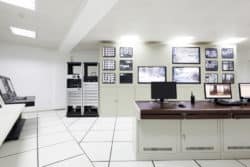 Remote monitoring is a networked technical system that allows for the remote security of locations (whether public or private), machines, or individuals. In other words, an individual, for example, who installs a remote monitoring system in their home will have the ability to see everything happening at home from a distance, depending on the specifics of the system. Surveillance cameras capture all activities inside and outside the home. The operation is done from a computer (laptop or desktop), but the remote monitoring device can also be a tablet or smartphone. Additionally, the owner can also activate or deactivate the system and perform other tasks and control actions from any device that can connect to the Internet. Furthermore, some even more sophisticated systems can be configured so that the homeowner can be alerted in real-time via email or text if an alarm is triggered. After installation, the user can access these systems via the secure website of the company from which they purchased their security system.
Remote monitoring and video surveillance: what’s the difference?
Also known as “video protection,” video surveillance is a set of cameras that record a public or private space, either continuously or at defined times. Video surveillance is only useful if a response capability can be quickly deployed to analyze the footage, identify, and eliminate the danger posed by criminals. Anyone can install this type of device for their home, provided that you do not film the public road or any part of a neighboring property. Additionally, it is recommended to inform employees who regularly visit your home (cleaning staff, medical aides, babysitters, etc.) about the presence of such a device. The National Commission on Informatics and Liberty (CNIL) must also be informed. Remote monitoring, on the other hand, is a security service that operates continuously, meaning 7 days a week and 24 hours a day. The advantage here is that it allows you to benefit from the availability and responsiveness of security guards in case of danger at your home or business, even if you are not present. In other words, all alerts are processed, and actions are also taken in case of danger.
How does remote monitoring work?
 The operation of remote monitoring is quite simple. Indeed, as soon as the alarm system is triggered, the monitoring center is immediately notified. In the event of an intrusion, photos and video footage are automatically recorded by motion detectors and surveillance cameras, then transmitted instantly to the remote monitoring center. After reviewing this footage, the receiving agent uses the intercom system integrated into the alarm center to contact the protected locations and request password authentication. In the event of a real danger, the monitor calls the police or emergency services for an on-site intervention. Finally, they assess the implementation of precautionary measures aimed primarily at restoring the safety of the premises if, in the meantime, they have been compromised.
Remote monitoring: usefulness and advantages
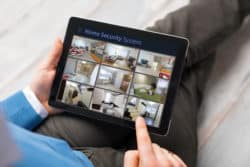 It is true that a traditional alarm system would be sufficient for any individual or professional to be alerted in case of intrusion, fire, or disaster. However, protection will not be 100%, especially since no third party can intervene to analyze the situation and trigger an appropriate response if the owner is unable to act or is completely absent. You also agree with us that the siren sounds in vain if the manager is not accessible. The good news is that with the advent of remote monitoring, this problem no longer arises. Indeed, it guarantees the availability and real-time reaction of a qualified agent. Thus, even when no one is present on the premises, you get effective protection. The same applies in the event of a possible accident in the presence of occupants! In fact, remote monitoring, once alerted, can intervene, for example, in situations of medical distress, attempted assault, or armed robbery. It should be emphasized that this assistance covers not only the response to the emergency situation but also the restoration of safety and the implementation of temporary measures when circumstances warrant it. Therefore, it can be said that remote monitoring is a complementary service to the traditional alarm. In other words, in addition to the action of opening detectors, wireless cameras, and other surveillance devices installed on protected premises, it offers human intervention. Better yet, this additional protection provided by remote monitoring is done with respect for privacy, as remote monitoring agents can only access the footage when the alarm is triggered. And as mentioned above, it is the owner who controls everything: activation or deactivation of the alarm (remotely), viewing recorded videos from a video camera (optional), taking photos via motion detectors equipped with a sensor, etc. For a comprehensive protection service, we recommend opting for Verisure or Securitas Direct. Indeed, the alarm systems offered by the latter come with remote monitoring. The base consists of a central unit, detectors (motion, shock, and opening), as well as a smart badge reader and badges for accessing and deactivating the system. Of course, you can benefit from other equipment in the form of options, whether you are a professional or an individual.
Remote monitoring: the main devices and their advantages?
There are several remote monitoring devices. Discover below the main ones along with their advantages.
Deterrent remote monitoring systems
Whether you are a homeowner or a simple tenant, acquiring a deterrent remote monitoring system is one of the best alternatives to secure your home. Indeed, no burglar would dare approach your apartment if you install prominent detectors on the facade of your home with signs indicating that it is under 24/7 remote monitoring protection. Thieves, as you well know, almost all prefer to operate discreetly and not under the watchful eye of cameras.
High-tech orientation monitoring systems
 Want to catch burglars in your trap? Well, install miniaturized cameras. These actually take the form of ordinary decorative objects and allow you to monitor your home, garage, or commercial premises from a distance, discreetly. In addition to being equipped with Wi-Fi and/or Bluetooth technologies, these cameras also have an IP address. That said, just to monitor live what is happening in your home from any corner of the world, connect to the Internet with your smartphone, tablet, or computer and enter the camera’s email address on a dedicated application. You can also pair this high-tech remote monitoring option with a subscription to a remote monitoring company. Thus, you will be protected even if you are unreachable or unable to act.
Systems with rapid intervention
Here, the detectors are connected to a remote monitoring center, available 24/7. If doubts cannot be resolved remotely in the event of an attempted intrusion, a security agent is dispatched by the monitoring agents. Once there, they assess the situation, and if the intrusion is confirmed, the police are immediately alerted. For added security, equip yourself with a Securitas Direct Antivol fog generator. This way, the monitoring agents can trigger this smoke generator before the arrival of law enforcement. You agree with us that without visibility in the room, intruders will be more easily stopped in their actions.
Is remote monitoring more effective than a burglary alarm?
Many people, instead of subscribing to a remote monitoring service, prefer to settle for a burglary alarm. But the alarm is only there to deter the burglar by emitting a siren. To get straight to the point, remote monitoring is the best solution to optimize your security against theft.
Important : If you wish to install remote monitoring for optimal security, know that the purchase price of the equipment and assembly costs around €100. For the price of a monthly subscription, expect between €200 and €500.
We are now at the end of this article. If you found it useful, please let us know in the comments.
Tag : working in security