
A magnesium pool refers to a basin whose water is treated with mineral salts containing magnesium, instead of traditional chlorine or pure salt. Magnesium, naturally present in seawater and the human body, acts as a clarifying agent once dissolved in the pool water. This type of treatment relies on a patented blend of minerals combined with a specific filtration system.
Chemical balance of a magnesium pool: pH, TAC, and TH to monitor
Articles presenting magnesium pools emphasize the comfort of swimming. Few detail the main technical constraint: the addition of magnesium salts alters the hardness of the water (the TH, which measures combined calcium and magnesium). Without adjustment, the risk of scale increases.
In a traditional chlorine pool, the TH is mainly managed based on calcium. With magnesium treatment, monitoring must integrate both minerals simultaneously. The TAC (alkalinity) and pH must be calibrated more precisely to avoid limescale deposits on the walls, waterline, and filtration equipment.
In practical terms, this means more frequent water analyses, especially when starting up the pool and after each addition of minerals. An owner who neglects this pH-TAC-TH balance risks having cloudy or scaled water, which negates the expected benefits of magnesium. To learn everything about magnesium pools, one must first accept this additional analytical rigor compared to ordinary salt treatment.
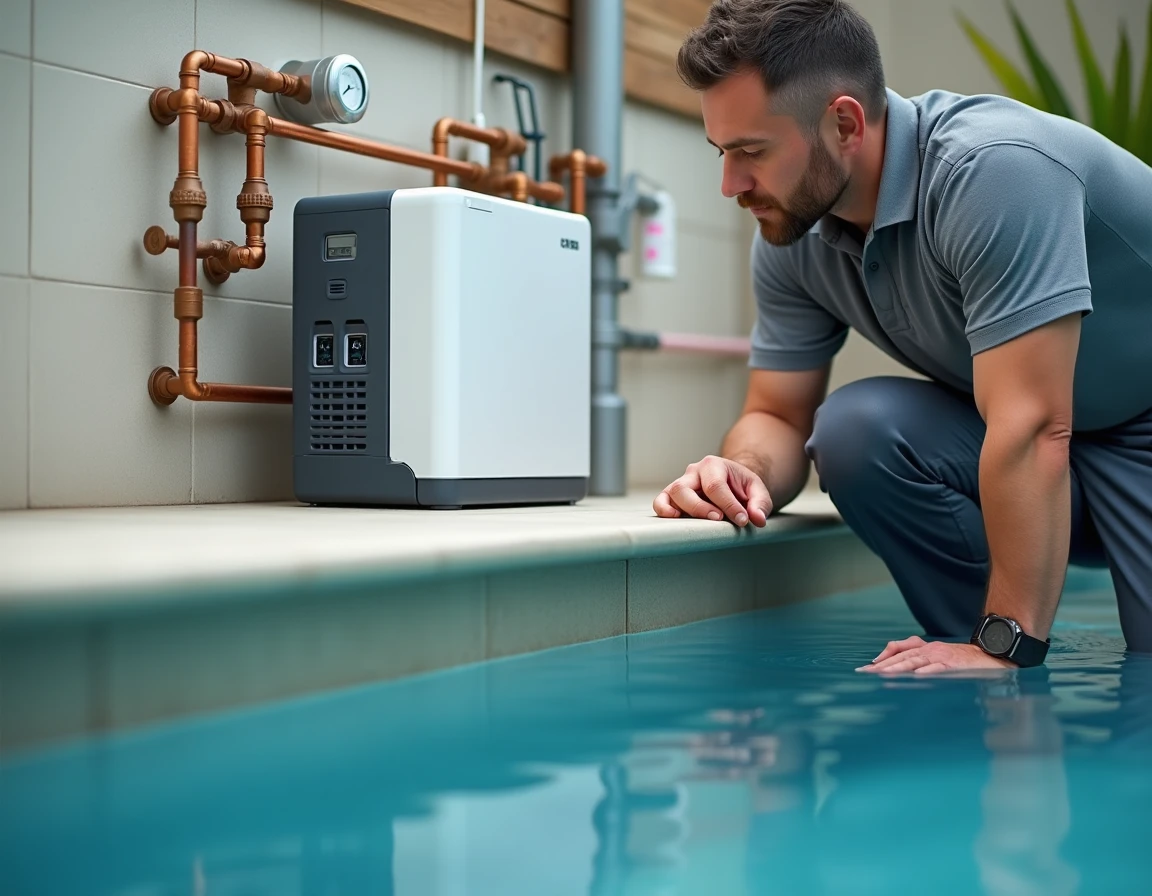
Magnesium and electrolysis: how water treatment works
Magnesium treatment does not eliminate all disinfection. It transforms it. The most common system combines MagnaPool minerals with a hydroxinator, a device that generates chlorine at a very low concentration through the electrolysis of salts present in the water.
The role of the hydroxinator
The hydroxinator operates on a principle similar to that of a salt electrolyzer, but adapted to the specific mineral composition of magnesium salts. The chlorine produced remains at a very low level, sufficient for disinfection but too weak to cause the irritations or odors characteristic of a traditional chlorine pool.
Filtration plays a complementary role. Dissolved magnesium has a natural clarifying power: it promotes the aggregation of fine particles, which improves filter performance. MagnaPool systems use a recycled glass filter media whose filtration fineness exceeds that of traditional sand.
What distinguishes this system from a traditional salt electrolyzer
A traditional salt electrolyzer converts sodium chloride into active chlorine. The pool then contains a notable salt concentration, with a sometimes perceptible taste. In a magnesium system, mineral salts replace sodium chloride, and the produced water resembles thermal water more than seawater.
The other difference concerns the electrolysis cell. Cells designed for MagnaPool minerals are calibrated for a different flow and concentration. Installing magnesium minerals in a standard salt electrolyzer does not yield the same results and can damage the equipment.
Indoor magnesium pool: the case of home balneotherapy
A usage still poorly documented in pool guides concerns indoor basins. In a covered pool, chloramination (formation of chloramines by reaction between chlorine and organic matter) poses a real problem: odor, respiratory irritation, accelerated material degradation.
Magnesium treatment significantly reduces chloramination due to the very low level of active chlorine in the water. For an indoor pool used daily, such as a swim lane or a small relaxation pool, this characteristic significantly changes the quality of the ambient air.
Several players in the wellness sector now position these pools as solutions for home balneotherapy. Magnesium-rich water is recognized for its relaxing properties, its soothing effect on muscle pain, and its benefits for the skin. An indoor magnesium pool thus combines water treatment and wellness function in one piece of equipment.

Installing a magnesium pool: verification points before getting started
Installing a magnesium treatment is not just about pouring salts into the basin. Several elements determine the success of the project.
- The filtration system must be compatible. MagnaPool minerals work with a glass filter media, not with traditional sand. If the existing filter uses sand, the media must be replaced or the filter changed.
- The hydroxinator replaces the standard salt electrolyzer. The two devices are not interchangeable. An installation quote must include this specific equipment.
- The hardness of the filling water conditions the initial dosage of minerals. Water that is already hard in calcium requires an adjustment of the TAC and pH before adding magnesium, to avoid limescale precipitation in the first weeks.
- Regular maintenance involves periodic replenishment of MagnaPool minerals, which costs more than regular salt. This recurring extra cost must be included in the annual pool budget.
In new construction, integration is simpler: the pool builder sizes the filtration and hydroxinator from the design stage. In an existing pool treated with chlorine or salt, conversion requires the replacement of several components, which represents a more substantial initial investment.
Regular maintenance and limits of magnesium treatment
Maintaining a magnesium basin is still less burdensome than manual chlorine treatment, but it does not exempt one from regular monitoring of water parameters. The pH, TAC, and TH must be checked at least once a week, more often during periods of heavy use or heat.
The system also has limits. In cases of strong contamination (heavy storms, unusual attendance), a shock treatment may still be necessary. Magnesium alone is not enough to recover green water. The system’s reactivity to peaks of organic pollution is lower than that of manually dosed chlorine treatment.
The choice of a magnesium pool is mainly justified for owners seeking superior swimming comfort and who accept more precise analytical maintenance. The soft, odorless water more than compensates for the rigorous monitoring for those who use their pool several times a week, especially with children or in an indoor pool.